

REAL ESTATE STAGING
Everything you need to know about real estate staging with GREEN GARDENS DESIGNS

What is staging?
Staging is showcasing all of your house’s best features by curating and designing a "lifestyle" for the home by arranging furniture in a way that shows how a space can be enjoyed and placing art & decor that accentuates the beauty of each room.
Home staging paints a picture to help buyers imagining themselves living this lifestyle and seeing just how amazing your home is.
Why staging?
When it comes to selling your home, staging is all about helping buyers get a vision for life in this home and getting them excited enough to make a competitive offer.
We find that staged homes consistently get more offers, higher bids, and sell quicker than homes that are not professionally staged. In fact, the difference is so BIG we believe every listing should be professionally staged.
Yup. All of them!


Get the highest bid & sell quick!
When you work with GREEN GARDENS DESIGNS & CITRUS RIDGE REALTY a professional staging consultation is always included in the selling package. Our in-house, professional staging team takes one to three days to thoroughly stage your home and create a space that captivates and inspires buyers. Then we take amazing photos for online marketing and digital listings.
And since we keep our own warehouse of staging furniture and décor, every listing has its own unique look and feel. Buyers won’t be seeing the same items over and over again when they comb through listings. That means your home will truly stand out and wow the buyers!
We’d love to help you get the most out of your home sale so you can move on with confidence. Contact us today to discuss the next step towards selling your home!

Home Styling & Staging Tips to Elevate Your Home
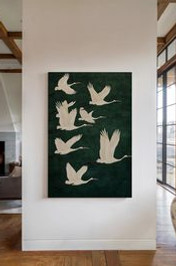
1) Art Height, Proportion & Placement Height
-
The center of the art work should be between 57 and 60 inches from the floor
-
When hanging art above furniture, like a sofa or console table, leave 6 to 8 inches from the top of the furniture to the base of the frame
-
In designated sitting rooms art can be hung slightly lower height, the key with hanging art is that it should remain eye level whether sitting or standing


Proportion & Placement
-
Use the two-thirds rule, meaning the art itself whether singular piece or a series should be two-thirds the width of the furniture below it
-
When hanging multiple pieces together, there should be 3 to 4 inches between the edge of each piece
-
For gallery walls, first start with your centerpiece of art then add additional pieces vertically and horizontally. Depending on the desired look for the gallery wall they will vary in size. Use consistent spacing and the the two-thirds rule for the most visually appealing result.


2) Furniture Placement
-
The golden ratio for any living space is 60/40, where 60% of the space is utilized for furniture and the remaining 40% is empty. This creates an ease to the space allowing for proper traffic flow and movement.


Applying the golden ratio to a living room:
-
Start with the focal point: Identify the room’s focal point, such as a fireplace or a large window, arrange largest furniture around point of interest.
-
Size your sofa: Choose a sofa that is roughly two-thirds the length of the wall it will occupy. This same rule can be applied for floating arrangements too, ensure the largest piece of furniture that it will parallel is two-thirds. **If using a current sofa follow previous sizing parameters for ratio scale.
-
Size your coffee table: Aim for a coffee table that is about two-thirds the length of your sofa. The height of the table should be level, or 1-2 inches shorter than the seating height. **For coffee table’s in a conversation grouping, the table should also be two-thirds the flanking furniture on each side.
-
Arrange accent chair(s): Position accent chairs to create a conversational grouping with the sofa, ensuring they create a balance to the size of the sofa and not too far from the coffee table.
-
Prioritize traffic flow: Leave at least 16-18 inches of space between the sofa and the coffee table to allow for easy traffic flow. Ensure all paths are clear on anchoring pieces (coffee table) for visitors to move freely without bumping in adjacent furniture.


3) Styling of Shelves and Top Surfaces
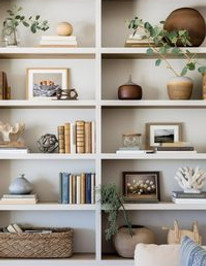
Key Principles for Shelf & Surface Styling:
-
Group in Odd Numbers: Items arranged in groups of three, five, or seven are generally more pleasing to the eye than even-numbered groupings. This creates an asymmetric but balanced look.
-
Create Consistency: To create consistency on shelving using a collection of items, place items using a cohesive color, print, texture or even repetition of similar items (e.g., books, printed/patterned glassware, plants). Place these items using the triangle technique, first establish a starting point for those items then repeat at the peak and again at a “mid-point”. This will draw the from each point creating an intensional and polished result.
-
Vary Height and Scale: Avoid placing items of the same size next to or above each other. Combine a mix of tall, medium and small objects (e.g., a tall vase next to a stack or horizontal books with a small object on top) to create a dynamic display and lead the eye around the area.
-
Embrace Negative Space: Do not feel the need to fill every single inch of space. Intentional empty space, or “breathing room,” is crucial for a curated and uncluttered look, allowing each item to stand out.
-
Create Layers and Depth: Place larger items like framed art or a large vase at the back of the shelf/surface and layer smaller items in front. This adds dimension and prevents the display from looking one-dimensional.
-
Maintain a Cohesive Color Palette: Stick a consistent color scheme (e.g., a base neutral palette with one or two accent colors) to tie all the items together, even if the objects themselves are varied.
-
Incorporate a Mix of Textures and Materials: Combine different textures (e.g., smooth glass with rough/distressed wood or woven baskets) to add richness and depth to the display.
-
Add Personal Touches and Greenery: Infuse personality with meaningful items like family photos or travel souvenirs. Live or faux plants add and organic touch and bring life to the display.




NOTE: If you are staging your home for sale proceed with the Key Principles for Shelf & Surface Styling but exclude any and all personal items like family photos. This will allow prospective buyers to imagine themselves in the home and the life style presented. For wall art collections like a family gallery wall, either remove the gallery wall all together, or replace the family photos with a mix of art consistent with the aesthetic of the home liuke landscape images for a well curated look. When staging your home for sale less is more with use of personal items. Remember buyers want to easily imagine their new life in the home, not like they are visiting a showcase of your life.
By following the outlined guidelines, you can create a balanced, visually appealing, and intentional look to enjoy for years or showcase your home best for a successful sale of your home. Home’s that are staged with the new potential buyer in mind on average sell 70-88% faster with less time on the market!


